
Home / Acupuncture
Acupuncture
針灸 zhēn jiǔ
Fine sterile needles placed at specific points on the body to prompt a response from the systems that already regulate you.
What acupuncture actually is
Acupuncture is the insertion of very fine needles into specific points on the body, held there for a period of time, sometimes with gentle manipulation. That is the whole of it mechanically. What makes it a medicine rather than a procedure is the reasoning that decides which points, on which side, to what depth, and for how long – and that reasoning comes from a diagnostic system built and refined over two thousand years.
It is one of the oldest continuously practised therapies in the world, and in Australia it is delivered by practitioners registered with AHPRA under the Chinese Medicine Board. Registration means nationally consistent standards for training, infection control, and professional conduct, the same regulatory framework that applies to physiotherapists, psychologists and pharmacists.
People usually arrive with one of two expectations: that it will hurt, or that it is somehow mystical. Neither survives a first appointment. What happens in the room is quite ordinary – a long conversation, a physical examination, some very small needles, and forty minutes of lying still.
The needles
This is the part worth being precise about, because almost everyone’s mental image is wrong.
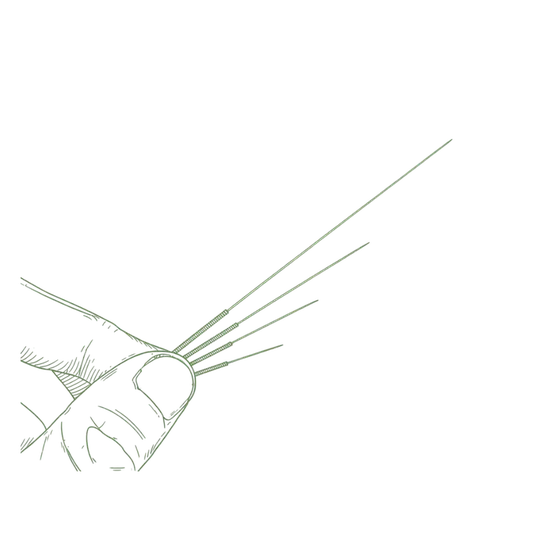
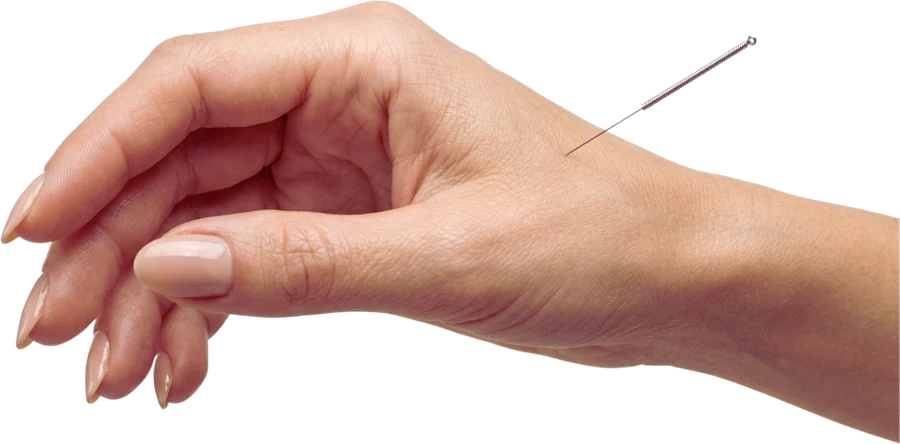
Acupuncture needles are filiform – solid, not hollow. A hypodermic needle used for a blood test or injection is a tube, because something has to pass through it. An acupuncture needle has no channel at all. Nothing is injected, nothing is withdrawn.
They are also extraordinarily fine. A typical acupuncture needle is around 0.16 to 0.30 millimetres in diameter – roughly the width of a strand of hair. You could fit several of them inside the bore of a standard blood-draw needle. They are flexible enough to bend under their own weight.
Every needle is single-use, pre-sterilised, and disposed of immediately after treatment in a clinical sharps container. Needles are never reused, never cleaned and re-inserted, and never used between patients. This is a regulated standard, not a clinic policy.
The response
What the body does
in response.
A needle placed in skin and muscle is a small, precise stimulus. What follows is not the needle doing something to you – it is your own physiology responding, across three systems at once.
The nervous system
This is the primary route. Inserting and manipulating a needle stimulates sensory nerve fibres in the skin, muscle and connective tissue. Those signals travel to the spinal cord and up into the brain, where they influence how incoming pain signals are processed – effectively changing the volume on what gets through.
Needling also engages the autonomic nervous system, the part that runs digestion, heart rate, blood pressure and sleep without your involvement. Many people shift visibly during a treatment: breathing slows and deepens, the stomach gurgles, hands warm up, and they fall asleep. That is a nervous system moving out of a sympathetic state and into a parasympathetic one, and for people who have been running on adrenaline for months, it can be the first time in a long while.

The vascular system
Circulation increases locally around a needled point. Small blood vessels dilate, blood flow to the area rises, and tissue that has been tight, cold or poorly supplied gets more of what it needs – oxygen and nutrients in, metabolic waste out.
This matters most for musculoskeletal complaints. A muscle held in contraction for months has compromised its own blood supply; it is tight partly because it is starved. Restoring flow to that tissue is a large part of why needling into a trigger point produces release rather than simply pressure.

The lymphatic system
Lymph has no pump. It moves through muscular contraction, breathing and pressure changes in the surrounding tissue, which means stagnant tissue tends to accumulate fluid and inflammatory by-products.
Needling and the local response it produces encourage movement through these tissues, supporting drainage and reducing the congested, heavy quality that often accompanies swelling, puffiness and long-standing inflammation.

Two languages, one set of observations. Chinese medicine describes all of the above as moving qi and blood through the channels and resolving stagnation. That vocabulary predates the anatomy by a long way, but it is describing the same clinical phenomena – observed carefully, recorded systematically, and refined across generations of practice. I use whichever framework makes a given explanation clearer for you.
What people come in for
Acupuncture is commonly sought for a wide spread of complaints. The pattern I see most often falls into a handful of groups:
- Musculoskeletal pain. Necks, shoulders, lower backs, knees, jaw tension, and old injuries that never fully resolved.
- Digestive complaints. Bloating, reflux, irregular bowels, cramping, and the gut symptoms that arrive with stress.
- Menstrual and menopausal symptoms. Painful or irregular periods, PMS, hot flushes, night sweats, and broken sleep.
- Sleep and stress. Difficulty falling asleep, waking at the same hour every night, a mind that will not settle, a body that stays braced.
- Headaches. Tension headaches, hormonal headaches, and migraine patterns.
- Fatigue. The tiredness that sleep does not fix, and slow recovery after illness.
What decides the treatment is not the label you arrive with. Two people with the same diagnosis frequently receive quite different point selections, because the pattern underneath differs – one runs hot and restless, the other cold and depleted, and the medicine treats that difference rather than the name of the condition.
I will also say plainly when something is outside what I should be treating. If a presentation needs a GP, a specialist, imaging or blood work, I will tell you, and I will not ask you to stop treatment prescribed by your doctor.
What a session looks like
- The conversation Your first appointment is longer than the ones that follow, and most of it is talking. I will ask about your main concern, and then about sleep, appetite, digestion, energy, temperature, stress and your cycle if relevant. Some of it will seem unrelated. It is how the pattern comes into focus.
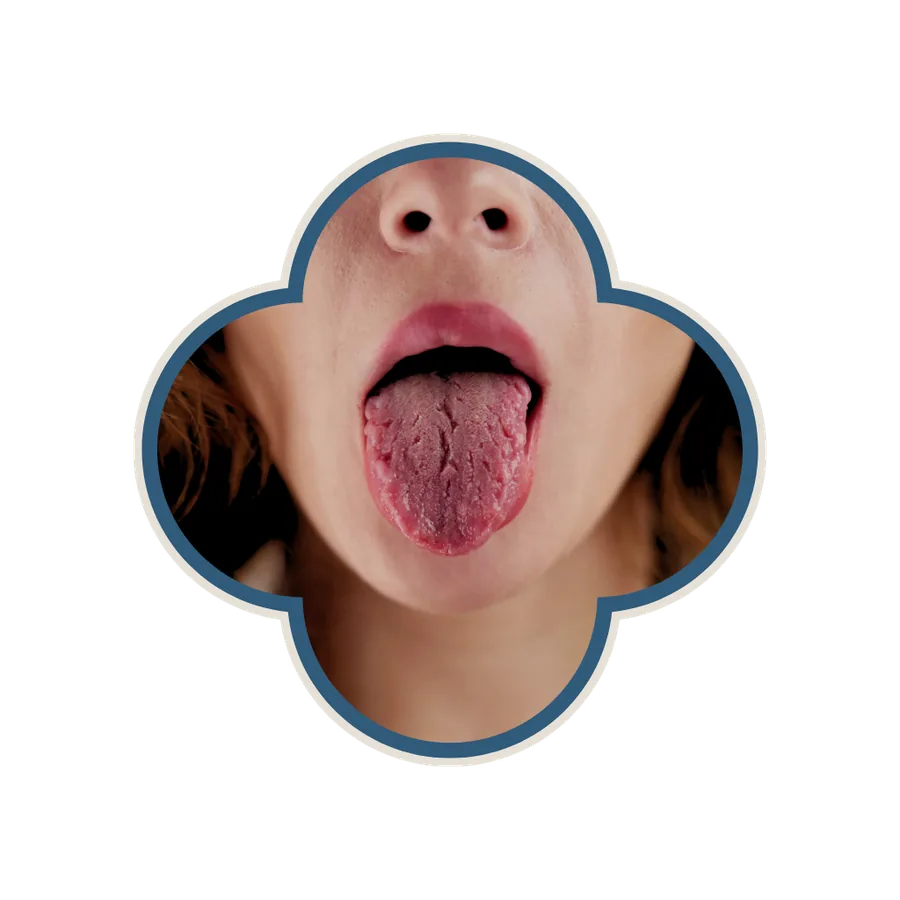
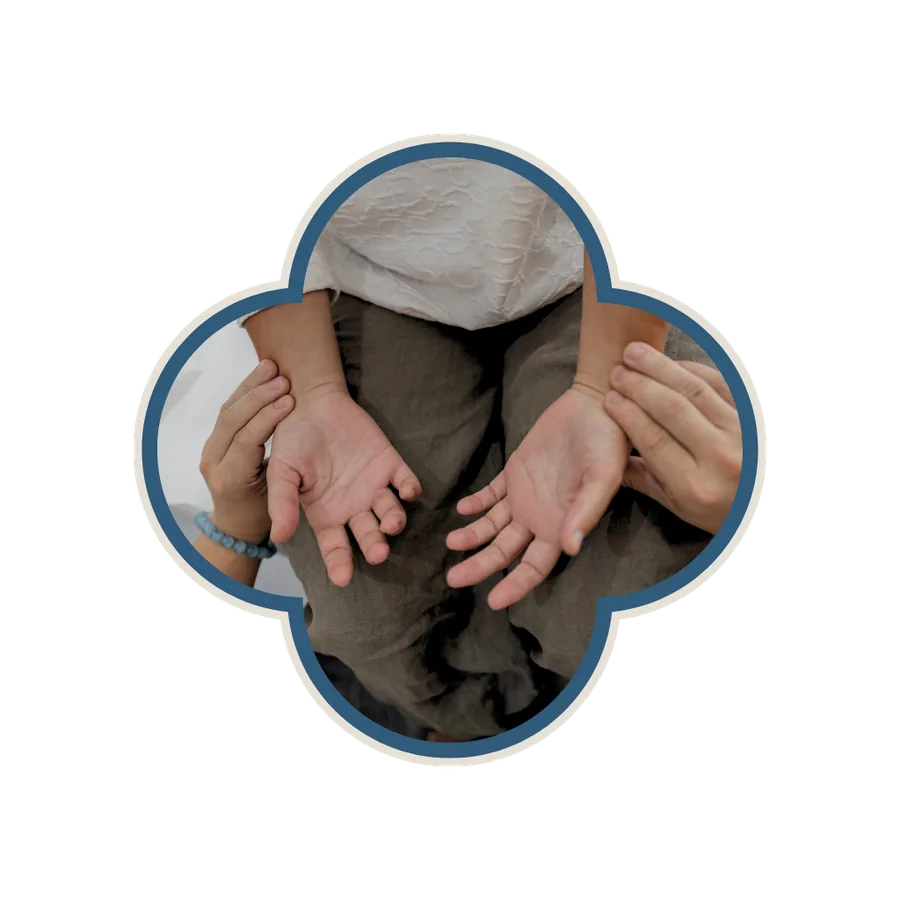
- Tongue and pulse I will look at your tongue – its colour, shape, moisture and coating – and take your pulse at three positions on each wrist, at two depths. These are the two traditional diagnostic tools, and together they give a reading of how your body is coping that a symptom list alone does not.
- What I am seeing Before any needles, I will tell you what I think is going on, what I would like to do, and roughly what I expect it to take. You can ask anything at this point, including whether I think acupuncture is the right choice at all.
- Treatment You will lie on a treatment table, usually face up or face down depending on the points. Needles go in quickly; most are in the lower arms, lower legs, hands, feet, abdomen or back. Anywhere between six and twenty needles is typical. They stay in for around twenty to thirty minutes while you rest, and I stay nearby.
- Afterwards Needles come out in seconds and are disposed of straight away. We will talk briefly about what to expect over the next few days, anything worth doing at home, and when to come back.
Tongue
Colour, shape, moisture and coating. The tongue changes slowly, so it reads as a record rather than a snapshot of your morning.
Pulse
Three positions on each wrist, at two depths. Not the rate, but the quality – thin and tight, or wide and loose, taut or empty underneath.
How it feels
Insertion feels like a brief tap or a mosquito-bite flick, and often nothing at all. Once a needle is in, the sensation people describe is a dull heaviness, a spreading warmth, a mild ache, or a travelling tingle. In Chinese medicine this is called de qi, and it is the sensation we are looking for – it usually settles within seconds.
Sharp, bright or electric pain is not expected. If you feel it, say so immediately and I will adjust or remove that needle. Nothing here has to be endured, and telling me does not spoil the treatment.
Most people find the middle of a session deeply restful. A good number fall asleep.
Afterwards
Reactions vary. Most people feel relaxed and slightly heavy-limbed for an hour or two. Some feel noticeably sleepy for the rest of the day; others leave with more energy than they arrived with. Both are common and neither indicates anything is wrong.
- Drink water and eat something normal afterwards.
- If you can, avoid scheduling anything demanding immediately after your first session, until you know how you respond.
- Heavy training, alcohol and very hot baths are worth leaving for a few hours.
- Occasionally a small bruise appears at a needle site, or a point feels tender for a day. Both resolve on their own.
- Symptoms sometimes stir slightly before they settle. If that happens, tell me at the next appointment – it is useful information, not a setback.
How many sessions
It depends on what you are coming in with and how long it has been there. As a rough guide, something recent often responds within a handful of sessions, while long-standing patterns usually need a course of weekly treatments before spacing out.
After your first appointment I will give you an honest estimate, and we will review it as we go. If you are not noticing change after a reasonable trial, I will say so rather than keep booking you in.
Safety, and when to tell me things
Acupuncture performed by a registered practitioner using single-use sterile needles has a low risk profile. The most common effects are minor: small bruises, brief tenderness, occasional light-headedness.
Please tell me before treatment if you:
- are pregnant, may be pregnant, or are trying to conceive – some points are avoided in pregnancy
- take blood-thinning medication, or bruise or bleed easily
- have a pacemaker or any implanted electrical device
- have a bleeding disorder, or a condition affecting your immune system
- have lymphoedema, or have had lymph nodes removed
- have a needle phobia or have fainted during medical procedures before – this is workable, and worth knowing in advance
None of these automatically rule out treatment. They change how I work.
Questions
Common questions
Not in the way people expect. The needles are about the width of a hair and nothing is injected through them. Insertion is a brief tap; after that, most people feel a dull heaviness or warmth that settles in seconds. Sharp pain is not expected, and if you feel it, tell me and I will adjust the needle immediately.
The needles are often similar. The reasoning is not. Dry needling targets trigger points in muscle to release local tension, and is typically used within a physiotherapy framework. Acupuncture selects points based on a whole-body diagnostic pattern, which is why an acupuncturist might needle your leg for a headache. The two can complement each other.
Yes, and I would encourage it. Chinese medicine works alongside conventional care rather than in place of it, and I will never ask you to stop treatment prescribed by your doctor. Please do tell me what medications you take, particularly if herbs become part of your plan.
Loose clothing that rolls up easily above the elbow and knee, since many commonly used points sit on the lower arms and legs. If treatment needs access to your back, shoulders or abdomen, you will have privacy to undress to your comfort level and be draped with towels throughout.
Many funds offer rebates for acupuncture provided by a registered practitioner, but cover varies considerably between funds and levels of extras. Call your fund and ask what they cover for acupuncture with an AHPRA-registered Chinese medicine practitioner. I can provide a receipt with everything needed to claim.
Not sure if it suits you
Ask before
you book.
If you are unsure whether acupuncture is right for what you are dealing with, book a free 15-minute call. Tell me what is going on, ask anything you like, and I will give you an honest answer – including if I think someone else is better placed to help.
Book an appointment