

Home / Gua sha
Gua sha
刮痧 guā shā
A smooth-edged tool drawn along the meridian pathways to move what has become stuck – and to show, in the marks it raises, exactly where the stagnation sits.

What it is, and what it is not
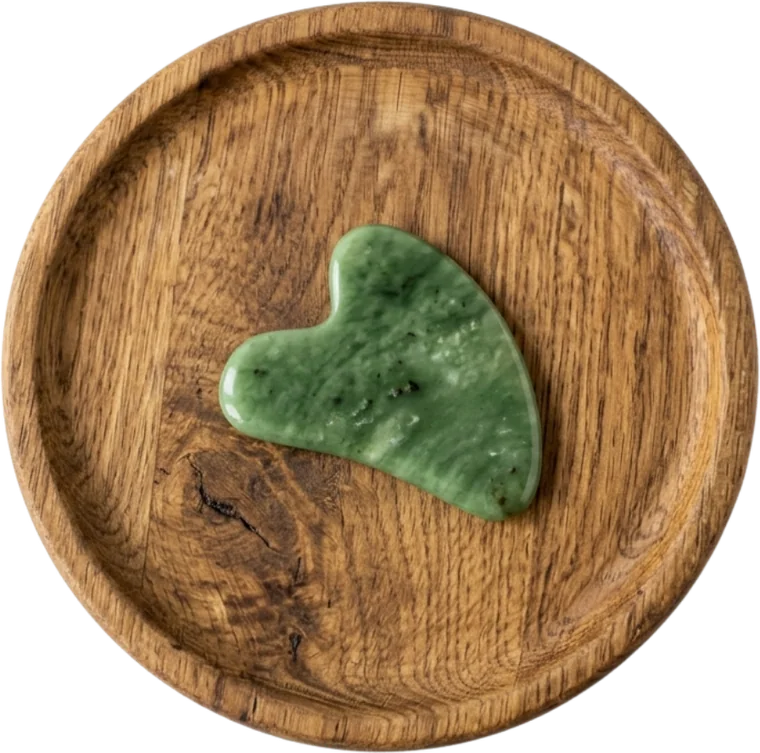
Gua means to scrape; sha refers to the marks that rise as a result. A balm is applied, and a smooth-edged tool – jade, buffalo horn or steel – is drawn along the tissue in short, firm strokes, held at a shallow 15 to 45 degree angle. It is worked over muscle bellies only: back, shoulders, buttocks, limbs. Never the spine, never the kidneys, never over bone.
Massage compresses muscle to release a knot. Gua sha follows the meridian pathways – the jing luo – and the strokes track those channels rather than wherever the muscle happens to feel tight. The intent is different: to move stuck qi through a channel and break a blockage, rather than to relax a muscle.
Sha is the point
The marks are not a side effect. They are what the treatment is for.
What rises to the surface is understood as stagnant blood and fluid pooled in the spaces between muscle and skin – in classical terms, blood stasis and dampness. Scraping provokes it upward, out of the tissue where it has been sitting.
Sha is not a bruise
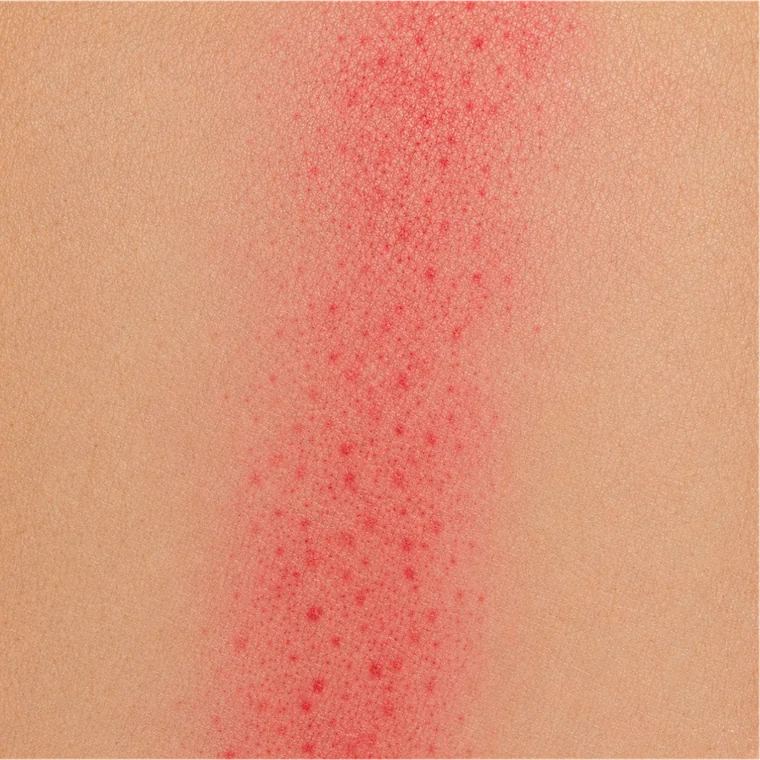
A bruise is trauma – impact tearing blood vessels. Sha is petechiae, raised by shear at the surface without that rupture. The difference is easy to feel: sha is hot to the touch, a bruise is cold. In Chinese medicine that heat is pathogenic heat being drawn out and released.
Why it comes before needling
Gua sha is often used before acupuncture rather than after. Scraping opens and stimulates the channel first, bringing blood into the area and softening tissue that has been locked down. Needling into that prepared area lands differently – the point responds more readily, and the treatment does more with less. Needling cold, congested tissue is working against resistance.
On pain, and what it tells us
I would rather say this plainly than have you surprised on the table: gua sha can be painful. Not unbearable, and not damaging, but genuinely uncomfortable in places – and that discomfort is not incidental.
Where there is free flow, there is no pain; where there is pain, there is no free flow. Pain indicates blockage in the meridian. An area that hurts under the tool is telling us the channel there is obstructed, and that this is where the work needs to happen.
Most of a treatment feels like firm, satisfying pressure. Then the tool crosses an obstructed section and you will know about it – and that section is usually the one that changes most. Tell me what you feel as we go; that is diagnostic information, not complaining. The discomfort also reduces markedly across a course, which is one of the clearest signs the blockage is clearing.
It should never be so painful that you brace against it. A braced body resists the release we are working toward.
The marks as a diagnostic mirror
The colour of the sha, and whether it appears at all, tells us about your internal state – and changes what I do next.
- Bright red. Surface heat, or something recent – a cold coming on, a fresh strain. Clears quickly.
- Deep purple or near-black. Chronic, deep stagnation: old injuries, long-term stress, liver qi stagnation. Needs a course rather than a session.
- No sha at all. The most instructive result, and the one people misread as failure. If nothing rises under adequate pressure, the body likely lacks the qi and blood to push anything to the surface. That indicates deficiency, and it changes the approach entirely – away from clearing, toward building.
Where it appears matters too. Marks often rise along a channel rather than under the whole tool. Colour lightens across a course, which is one of the few visible measures of change in the medicine.
The fascial shear effect
The modern account describes the same technique differently. At that shallow angle the tool produces shear stress across the superficial fascia – the connective layer between skin and muscle, which becomes dehydrated and sticky when tissue is held still for long periods.
Shearing that layer is understood to rehydrate it and restore glide between the planes. This is why range of movement often changes immediately, before any muscle has relaxed, and why stretching alone rarely resolves it: stretching lengthens muscle, but does not restore glide between adhered layers.
The skin as a gateway
In Chinese medicine the skin is the boundary at which external pathogens enter and are expelled. Gua sha opens the pores, and one traditional use is releasing wind-heat – the aching, chilled, stiff-necked feeling at the start of a cold. Afterwards the tissue is left warm and bright, which traditionally is nourishing the skin with ying qi.
Commonly used for
- Neck, shoulder and upper back tension from desk work, driving and carrying stress physically
- Restricted movement, where the limit feels like tissue rather than joint
- Long-standing tightness that massage eases only temporarily
- The early stage of a cold, with aching, chills and a stiff neck
- Tension headaches beginning at the base of the skull
- Preparing an area before needling
Aftercare
The pores are open afterwards, which leaves you briefly more exposed. The aftercare follows from that.
- Keep the area covered and warm, out of wind and draughts, for the rest of the day. This is the one that matters most.
- Avoid cold drinks and cold food for the remainder of the day.
- Skip very hot showers, saunas, swimming and heavy training until tomorrow.
- Do not scrub the marked area, and keep it out of the sun while the colour is there.
Marks generally fade over two to four days, occasionally up to a week on the back.
When it is not appropriate
Please tell me before treatment if you take blood thinners or bruise easily, have a bleeding disorder, are pregnant, have broken skin, a rash or active eczema in the area, have lymphoedema or have had lymph nodes removed, have a fever or active infection, or have had recent surgery or injury there. Also tell me if you are significantly depleted or recovering from illness – that is when scraping is least appropriate, not most.
Questions
Common questions
It can, and I would rather tell you upfront. Most of it feels like firm, satisfying pressure; where a channel is obstructed it will be genuinely uncomfortable, and that pain is the signal telling us where the blockage sits. It should never be so painful that you brace. The discomfort reduces markedly across a course.
No. A bruise comes from impact tearing vessels. Sha is petechiae raised by shear without that trauma. The clearest difference is temperature – sha feels hot, a bruise feels cold. It fades evenly over two to four days.
It is meaningful rather than disappointing. If nothing rises under adequate pressure, your body likely does not have the reserves to bring anything to the surface, which points to deficiency. That tells me to stop clearing and start building instead.
Scraping opens the channel first, bringing blood to the area and softening tissue that has been locked down, so the acupuncture that follows works with a channel that is already moving.
Not sure where to start
Start with
a conversation.
You do not need to know which treatment you need before you book. Tell me what is going on, ask anything you like, and we will work out the right approach together – including whether someone else is better placed to help.
Book an appointment