
Home / Fire cupping
Fire cupping
拔罐 bá guàn
Glass cups placed on the skin to lift and decompress tissue – the one technique in bodywork that pulls rather than presses.
What fire cupping is
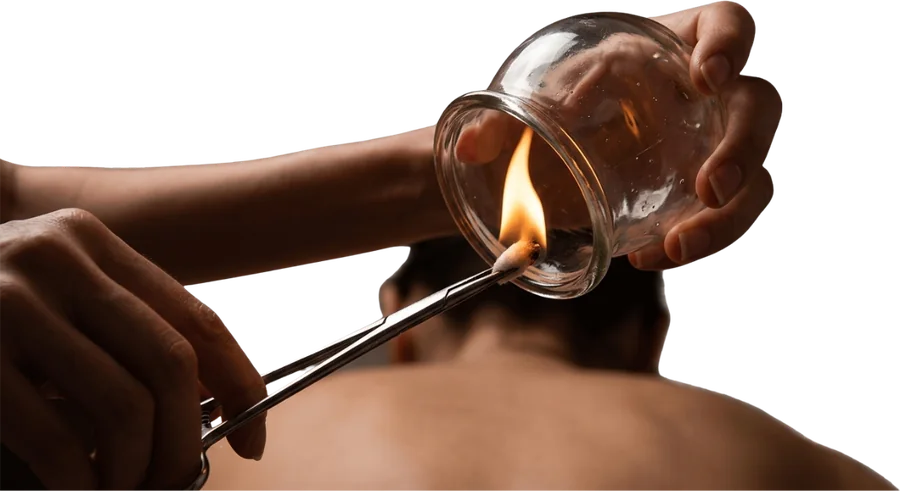
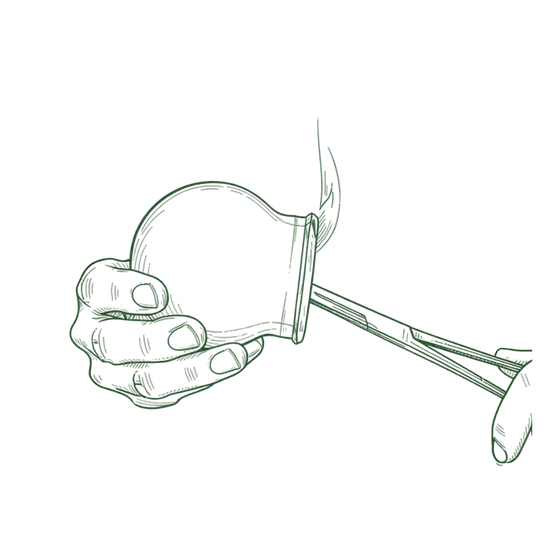
A flame is passed briefly inside a glass cup to consume the oxygen and heat the air. The cup is placed immediately onto the skin, and as the trapped air cools it contracts, creating a vacuum that draws the skin and the tissue beneath it upward into the cup.
The flame never touches you. It is inside the cup for about a second, and it is out before the cup reaches your body. The glass is warm, not hot. What you feel is suction.
Why lifting is different
Nearly all hands-on bodywork compresses. A thumb, a foam roller, an elbow into a trigger point – all push tissue downward, toward the bone, and the release comes from that pressure.
Cupping does the opposite. The suction lifts the skin and the layers underneath away from the structures below, creating space rather than closing it. That single mechanical difference is why cupping reaches things massage sometimes cannot.
Two ways of working
The cups can stay put or they can travel, and the two do quite different jobs.
Stationary cupping
Cups are placed and left in position for five to fifteen minutes, usually over the areas of greatest restriction. This is the deeper of the two – sustained suction in one place, drawing stagnation up out of the tissue and holding that decompression long enough for the layers to release.
Mobile cupping
Also called sliding or running cupping. The skin is oiled first, a cup is applied with lighter suction, and then glided slowly across the area in long repeated passes – up and down the back, along the shoulders, down a limb.
This is the more dynamic technique, and it moves qi and blood strongly. Rather than decompressing one fixed point, it drags the lifted tissue along the length of a channel, carrying circulation with it. Where stationary cupping opens a spot, mobile cupping moves the whole pathway.
Because the cup keeps moving, its marks are usually more diffuse – a general flush rather than distinct circles – and often lighter.
Most treatments use both: mobile cupping first to warm and mobilise the area broadly, then stationary cups on the two or three places that need sustained work.
Working with fascia
Fascia is the continuous sheet of connective tissue wrapping every muscle, bone and organ. It is not a series of separate coverings but one interconnected web, which is why tightness in one place can pull on somewhere apparently unrelated.
Healthy fascia glides – the layers slide over one another as you move.
When tissue is held still for long periods – sitting at a desk, guarding an old injury, bracing against stress – those layers can become adhered to one another. The fluid between them thins, the glide is lost, and several sliding sheets start behaving as one stiff mass.
This explains something people find frustrating: you can stretch a fascially restricted area every day and it will not release. Stretching lengthens muscle. It does not restore glide between adhered layers.
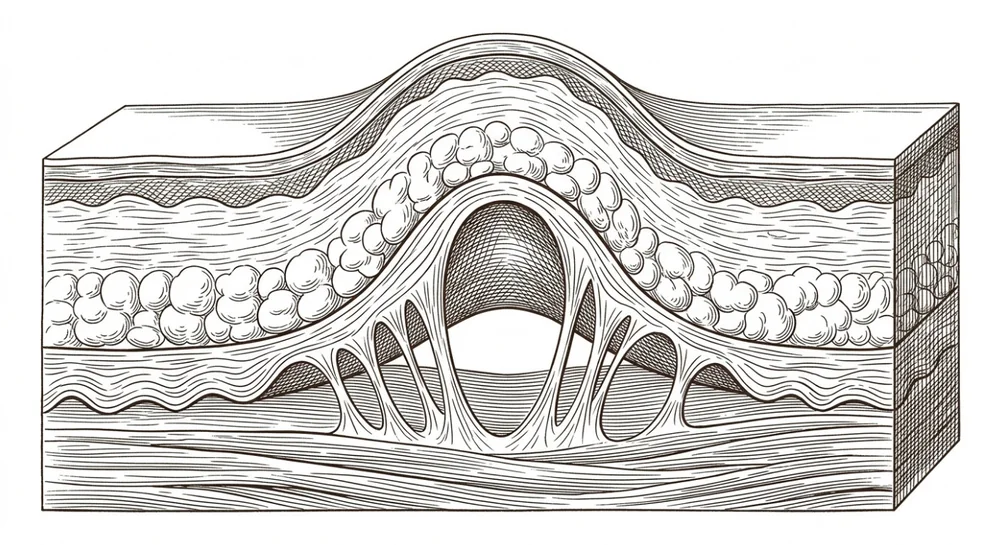
Suction addresses exactly that, lifting the superficial layers away from the deeper ones and introducing space and shear between them. Mobile cupping adds directional movement to that lift, dragging the freed layers across one another along the length of the area. Restored glide is why the effect often outlasts a massage, and why people say the release felt like it happened underneath the muscle rather than in it.
In Chinese medicine terms, cupping is described as drawing out stagnation, dispelling cold and damp from the channels, and moving qi and blood in the surface layers – the same clinical territory, described from a different starting point.
What it is used for
- Back, shoulder and hip tightness, particularly long-standing patterns that keep returning to the same spot.
- Post-training soreness and recovery, and areas that are not recovering between sessions.
- Restricted movement where the limit feels like tissue rather than joint.
- Areas that feel cold, heavy or dull rather than sharply painful.
Cupping is usually part of a treatment rather than all of it – often following needling, or preceding it so the needles can reach tissue that was previously locked down.
The marks
Cupping leaves marks, usually pink through to deep purple. They are not bruises. A bruise comes from impact rupturing vessels; cup marks are the result of suction drawing blood and fluid from deeper tissue into the surface layers, where it sits until reabsorbed. They are not tender in the way a bruise is.
Colour varies with the state of the tissue. Tight, under-circulated areas mark darker; well-supplied tissue may barely mark at all under identical suction. That changes over a course – the same area cupped four weeks later usually marks noticeably lighter. Stationary cups leave distinct circles; mobile cupping leaves a broader, more even flush.
Marks typically fade within three to seven days.
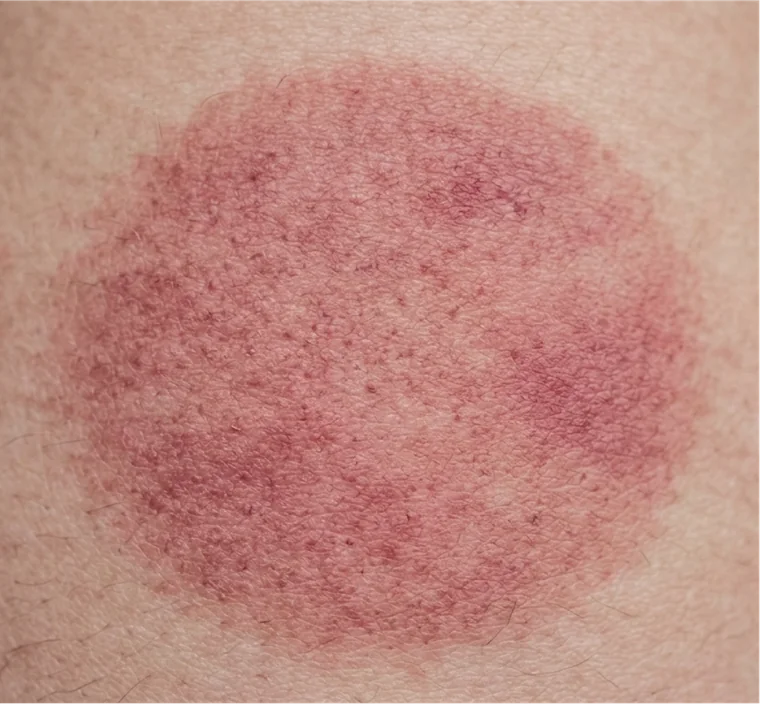
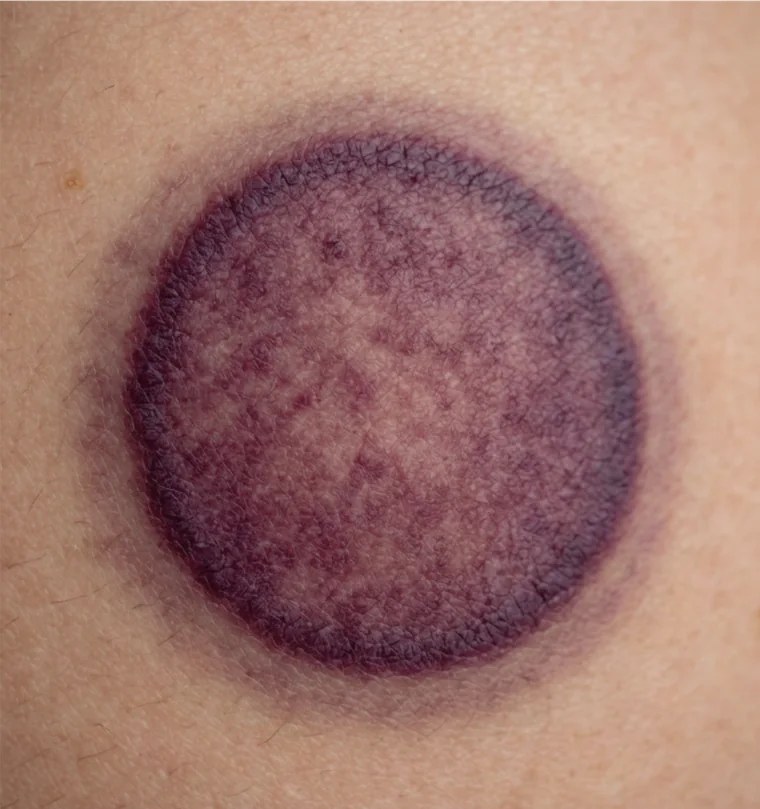
If you would rather not have visible marks – an event, a holiday, photographs – tell me. We can use lighter suction, shorter placement times, mobile rather than stationary cups, or work only where clothing covers.
Aftercare
- Keep the area covered and warm for the rest of the day, and avoid wind and cold directly on the skin.
- Drink water and eat normally.
- Avoid very hot showers, saunas, spas and ice baths for the rest of the day.
- Leave heavy training until tomorrow. Light movement is fine and often helpful.
- Do not rub or massage the marked areas while the colour is present.
Most people feel lighter and looser, sometimes immediately, sometimes the next morning. Mild tenderness on day two is possible but not typical.
When cupping is not appropriate
Please tell me beforehand if you take blood thinners or bruise easily, have a bleeding disorder, are pregnant, have broken skin, a rash, sunburn or active eczema in the area, have lymphoedema or have had lymph nodes removed, have deep vein thrombosis, a fever or an active infection, have had recent surgery or an unhealed scar there, or have very thin or fragile skin – including from long-term corticosteroid use.
Most of these adjust where and how firmly I work rather than ruling cupping out.
Questions
Common questions
It should not. The sensation is a firm pulling or tightness that builds over a few seconds then settles, and most people find it oddly pleasant. Mobile cupping feels more like a deep, dragging stroke. Suction is fully adjustable – tell me if a cup feels too strong and I will release and reset it.
Stationary cups stay in one place for five to fifteen minutes, working deeply into a specific area. Mobile cupping glides an oiled cup across the region in long passes, moving qi and blood strongly along the whole pathway rather than decompressing one point. Most treatments use both.
No. The flame is inside the cup for about a second to heat the air, and it is out before the cup touches you. The glass is warm rather than hot. Fire is simply the traditional method of creating the vacuum.
Darker marks generally indicate tissue that is tighter and less well circulated. It is not a measure of how hard I worked. The same area treated with identical suction a few weeks into a course usually marks much lighter, which is one of the clearest visible signs of progress.
Direction. Massage compresses tissue downward; cupping lifts it upward, creating space between fascial layers rather than pressing them together. That is why it can reach restrictions massage does not, and why the release often feels like it happened underneath the muscle.
Not sure where to start
Start with
a conversation.
You do not need to know which treatment you need before you book. Tell me what is going on, ask anything you like, and we will work out the right approach together – including whether someone else is better placed to help.
Book an appointment